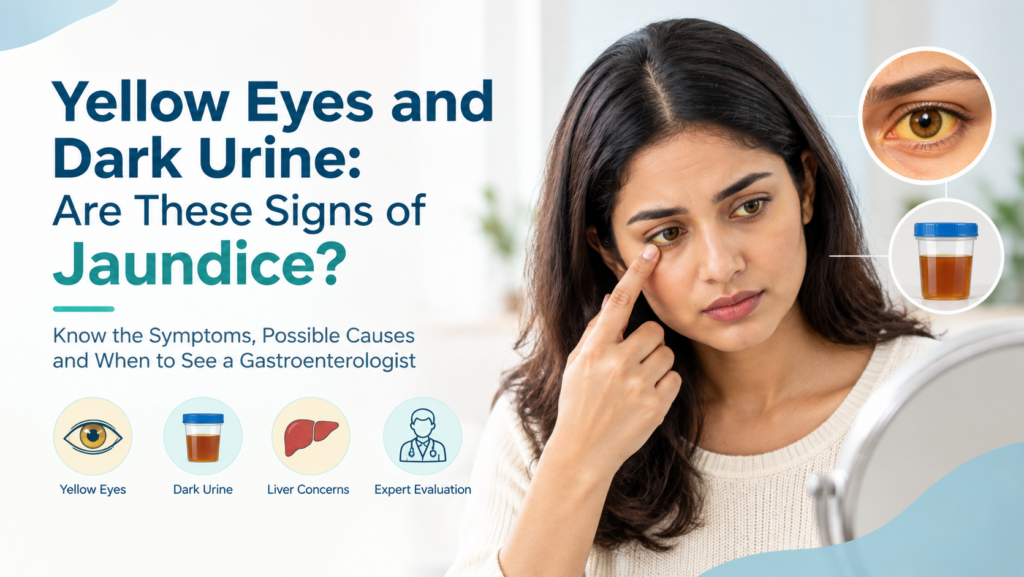
Yellow eyes and dark-coloured urine are symptoms that can sometimes indicate jaundice. Jaundice occurs when bilirubin, a yellow pigment produced during the normal breakdown of red blood cells, builds up in the body.
While yellowing of the eyes is one of the more recognizable signs of jaundice, dark urine may also occur depending on the underlying cause. Jaundice itself is not a disease but a sign that may be associated with conditions affecting the liver, bile ducts, gallbladder, blood cells, or other parts of the body’s bilirubin-processing system.
If you notice yellow eyes, unusually dark urine, or other symptoms such as abdominal discomfort, nausea, fever, or loss of appetite, it is important to seek medical evaluation rather than assuming the symptoms are caused by a minor digestive problem.
A Gastroenterologist in Nagpur can assess the symptoms, identify possible causes, and recommend appropriate investigations and treatment.
What Is Jaundice?
Jaundice is a condition in which the skin, whites of the eyes, or mucous membranes become yellow because of increased bilirubin levels in the blood.
Bilirubin is produced when red blood cells are naturally broken down. Normally, the liver processes bilirubin and helps eliminate it from the body through bile. If bilirubin production increases, the liver cannot process it properly, or bile flow becomes blocked, bilirubin can accumulate in the bloodstream.
The severity and symptoms of jaundice can vary depending on its underlying cause.
Are Yellow Eyes a Sign of Jaundice?
Yes, yellowing of the whites of the eyes can be an important sign of jaundice.
The yellow colour may first become noticeable in the eyes before it becomes obvious on the skin. The intensity of the yellowing can vary depending on the bilirubin level and the underlying condition.
However, yellow eyes should not automatically be assumed to be caused by one particular liver disease. Several conditions can result in elevated bilirubin.
A doctor may recommend blood tests and other investigations to determine why bilirubin has increased.
Why Does Urine Become Dark During Jaundice?
Dark or tea-coloured urine can occur in some types of jaundice.
When certain forms of bilirubin build up in the blood, the kidneys may remove more bilirubin through the urine. This can make the urine appear darker than usual.
However, dark urine does not always mean that a person has jaundice. Dehydration, certain medicines, foods, and other medical conditions can also change urine colour.
When dark urine occurs together with yellow eyes or skin, medical evaluation is advisable.
What Causes Jaundice?
Jaundice can have several possible causes. These can broadly involve problems occurring before bilirubin reaches the liver, within the liver itself, or after bile leaves the liver.
Possible causes include:
- Viral hepatitis
- Alcohol-related liver disease
- Fatty liver disease and other liver conditions
- Certain medicines
- Gallstones
- Bile duct obstruction
- Certain blood disorders
- Conditions affecting the breakdown of red blood cells
- Other liver or biliary disorders
The exact cause cannot usually be determined from yellow eyes or dark urine alone.
Jaundice Caused by Liver Conditions
The liver plays a central role in processing bilirubin. When liver cells are inflamed, injured, or affected by disease, the normal processing and elimination of bilirubin may be disrupted.
Liver-related causes of jaundice may include viral hepatitis, alcohol-related liver disease, medication-related liver injury, and other liver disorders.
Symptoms may include:
- Yellow eyes or skin
- Dark urine
- Loss of appetite
- Nausea
- Fatigue
- Abdominal discomfort
- Pale or light-coloured stools
- Itching
Not everyone with a liver condition develops all of these symptoms.
Can Gallstones Cause Yellow Eyes and Dark Urine?
Yes, gallstones or other conditions that interfere with bile flow can sometimes cause jaundice.
Bilirubin is normally eliminated from the body through bile. If a gallstone blocks the flow of bile, bilirubin may accumulate in the blood.
A person with bile duct obstruction may experience:
- Yellow eyes or skin
- Dark urine
- Pale stools
- Upper abdominal pain
- Nausea or vomiting
- Itching
- Fever in some cases
A doctor may recommend an abdominal ultrasound or other imaging studies when a blockage is suspected.
Can Hepatitis Cause Jaundice?
Certain types of hepatitis can cause jaundice.
Hepatitis refers to inflammation of the liver. Viral infections are one possible cause, although hepatitis can also result from alcohol, medicines, autoimmune conditions, and other factors.
Depending on the cause, hepatitis may cause:
- Yellow eyes or skin
- Dark urine
- Fatigue
- Nausea
- Reduced appetite
- Abdominal discomfort
- Fever
- Pale stools
Because different types of hepatitis have different causes and treatments, proper diagnosis is important.
Other Symptoms That May Occur With Jaundice
Yellow eyes and dark urine may occur with other symptoms depending on the underlying condition.
These can include:
1. Yellowing of the skin
The skin may gradually develop a yellowish colour along with the whites of the eyes.
2. Pale or clay-coloured stools
Reduced bile flow into the intestine can sometimes cause stools to become unusually pale.
3. Abdominal discomfort
Some liver, gallbladder, and bile duct conditions can cause pain or discomfort in the abdomen.
4. Nausea and vomiting
Digestive symptoms can accompany some conditions responsible for jaundice.
5. Loss of appetite
A person may experience reduced interest in food during some liver or biliary illnesses.
6. Itching
Bile-related conditions can sometimes cause generalized itching.
7. Fatigue
Tiredness may occur with several illnesses that can also cause jaundice.
When Should You See a Doctor for Yellow Eyes?
Yellow eyes should be medically evaluated, particularly when the change is new or occurs with other symptoms.
You should seek medical attention if yellow eyes are accompanied by:
- Dark urine
- Pale or clay-coloured stools
- Abdominal pain
- Fever
- Repeated vomiting
- Significant weakness
- Loss of appetite
- Unexplained weight loss
- Persistent itching
- Confusion or unusual drowsiness
- Increasing yellowing of the skin or eyes
Some combinations of symptoms may require prompt medical assessment.
When Is Jaundice an Emergency?
Jaundice can sometimes be associated with conditions that require urgent medical care.
Seek urgent medical attention if yellowing occurs together with severe abdominal pain, high fever, repeated vomiting, confusion, marked drowsiness, fainting, or significant deterioration in overall condition.
Jaundice accompanied by symptoms suggesting a serious infection or bile duct obstruction may also require prompt evaluation.
The appropriate level of urgency depends on the individual’s symptoms, examination findings, and medical history.
How Is Jaundice Diagnosed?
A doctor usually begins with a detailed medical history and physical examination.
The doctor may ask about:
- When the yellowing started
- Changes in urine and stool colour
- Abdominal pain
- Fever
- Appetite changes
- Alcohol consumption
- Current medicines and supplements
- Previous liver problems
- Recent illnesses or infections
- Travel or other relevant medical history
Blood and imaging tests may then be recommended depending on the suspected cause.
What Tests May Be Done for Jaundice?
Testing depends on the individual’s symptoms and clinical findings.
Possible investigations include:
- Bilirubin testing
- Liver function tests
- Complete blood count
- Hepatitis-related tests
- Other blood investigations
- Abdominal ultrasound
- Other imaging studies
- Additional liver or bile duct investigations when required
An ultrasound may be useful when gallstones, bile duct obstruction, or other abdominal conditions are suspected.
Not every person with jaundice requires every test. The doctor determines which investigations are appropriate based on the clinical situation.
How Is Jaundice Treated?
There is no single treatment for jaundice because jaundice itself is a symptom rather than one specific disease.
Treatment depends on the underlying cause.
For example, management may involve treatment of an infection, addressing medication-related liver injury, managing a liver condition, or treating a blockage in the bile ducts.
This is why identifying the underlying cause is an important part of Jaundice Treatment in Nagpur.
Self-medication or taking medicines marketed for “liver cleansing” without medical advice may not address the actual cause of jaundice.
Jaundice Treatment in Nagpur
If you notice yellow eyes, dark urine, or other symptoms associated with jaundice, consulting a qualified gastroenterologist can help determine the underlying cause.
Dr. Rachit Agarwal provides gastroenterology consultation in Nagpur for patients with jaundice and other liver, gallbladder, and digestive concerns. Depending on the symptoms and examination findings, appropriate blood tests, imaging, and other investigations may be recommended.
The goal of Jaundice Treatment in Nagpur is to identify the underlying condition and provide appropriate management based on the individual’s diagnosis and medical needs.
How Can You Prepare for a Jaundice Consultation?
Before visiting a doctor, it may be helpful to note:
- When you first noticed yellow eyes or skin
- When the urine became darker
- Any changes in stool colour
- Abdominal pain or discomfort
- Fever or vomiting
- Changes in appetite
- Recent medicines or supplements
- Previous liver or gallbladder problems
- Any available previous blood-test or scan reports
Providing this information can help the doctor understand the pattern and progression of symptoms.
Can Jaundice Be Prevented?
Prevention depends on the underlying cause.
Some general measures that may reduce the risk of certain liver and infectious conditions include:
- Avoiding excessive alcohol consumption
- Taking medicines only as directed
- Avoiding unnecessary supplements or herbal products
- Maintaining a healthy body weight
- Following appropriate food and hygiene practices
- Taking recommended vaccinations where applicable
- Managing conditions that can affect liver health
- Seeking medical advice when persistent liver-related symptoms occur
These measures cannot prevent every cause of jaundice, but they can support overall liver health.
Frequently Asked Questions
Are yellow eyes always a sign of jaundice?
Yellowing of the whites of the eyes is commonly associated with jaundice, which occurs when bilirubin levels increase. However, the underlying reason for the bilirubin increase can vary. Medical evaluation can help identify the cause.
Does dark urine always mean jaundice?
No. Dark urine can occur because of dehydration, certain medicines, foods, or other conditions. However, dark urine occurring together with yellow eyes or skin can be associated with jaundice and should be evaluated.
What should I do if I have yellow eyes and dark urine?
Consult a doctor for an appropriate evaluation. Blood tests and imaging may be recommended depending on your symptoms and examination findings.
Can gallstones cause jaundice?
Yes. A gallstone can sometimes block the flow of bile and cause bilirubin to accumulate, resulting in jaundice. Abdominal pain, dark urine, and pale stools may also occur.
Can hepatitis cause yellow eyes?
Yes. Some forms of hepatitis can cause inflammation of the liver and increase bilirubin levels, resulting in yellowing of the eyes or skin.
How long does jaundice take to go away?
The duration varies significantly depending on the underlying cause and its treatment. Some cases may improve after the underlying problem is addressed, while other conditions may require longer-term management.
Is jaundice dangerous?
Jaundice can have many causes, ranging from conditions that resolve with appropriate treatment to illnesses requiring urgent medical care. The significance of jaundice depends on its underlying cause and associated symptoms.
How do I find the best doctor for jaundice treatment in Nagpur?
When choosing a doctor for jaundice, consider a qualified gastroenterologist who can evaluate liver, gallbladder, bile duct, and digestive conditions and arrange appropriate investigations when required.
If you are searching for the best doctor for jaundice treatment in Nagpur, reviewing the doctor’s gastroenterology qualifications, experience, areas of practice, and approach to diagnosis can help you make an informed choice.
How do I choose a jaundice treatment hospital in Nagpur?
The appropriate hospital depends on the patient’s symptoms and the type of care required. When evaluating a jaundice treatment hospital in Nagpur, consider whether the facility provides access to relevant blood tests, imaging, gastroenterology consultation, and other investigations or specialist services that may be required.
Final Takeaway
Yellow eyes and dark urine can be important signs of jaundice, but they do not identify the underlying cause by themselves. Jaundice can occur due to liver conditions, bile duct obstruction, gallstones, hepatitis, blood-related conditions, and other medical problems.
If you notice yellow eyes, dark urine, pale stools, abdominal pain, fever, vomiting, or other concerning symptoms, medical evaluation can help determine the cause.
Dr. Rachit Agarwal provides gastroenterology consultation in Nagpur for patients requiring evaluation of jaundice and related digestive or liver concerns. Appropriate Jaundice Treatment in Nagpur begins with identifying the underlying cause and determining the suitable treatment approach.