
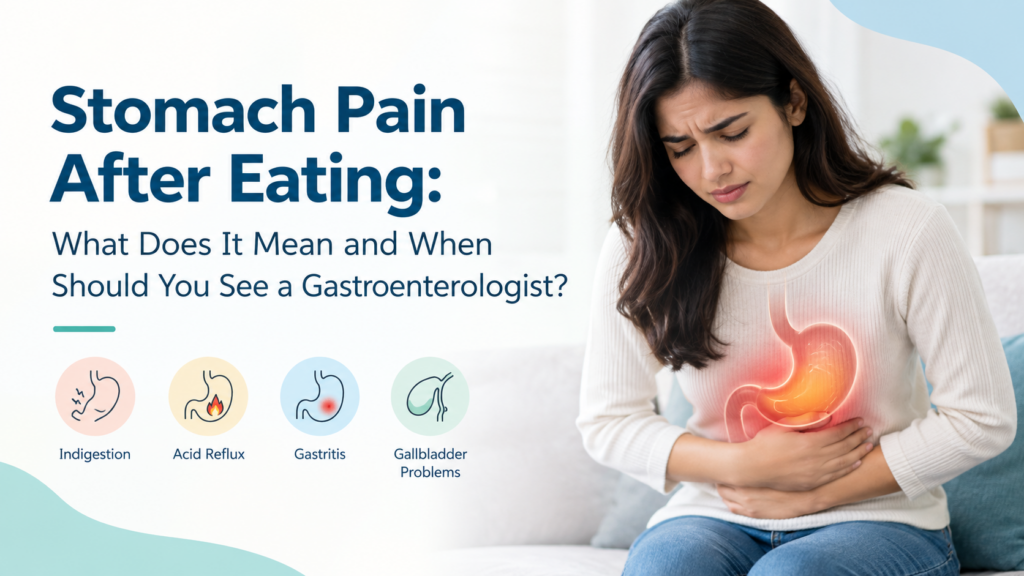
Stomach pain after eating can happen for many reasons. Sometimes it may be related to overeating, certain foods, indigestion, or temporary digestive discomfort. However, pain that happens repeatedly after meals, becomes severe, or occurs with other symptoms may require medical evaluation.
The location, timing, severity, and nature of the pain can provide useful information about its possible cause. A Gastroenterologist in Nagpur can evaluate persistent or recurrent digestive symptoms and determine whether further investigation or treatment is needed.
Why Can Stomach Pain Occur After Eating?
The digestive system becomes active after food is consumed. Stomach acid, digestive enzymes, bile, and intestinal movement all play important roles in digestion. Problems affecting any part of this process can sometimes cause discomfort after meals.
Some possible causes of stomach pain after eating include:
- Indigestion
- Gastritis
- Acid reflux
- Peptic ulcer disease
- Gallbladder problems
- Pancreatic conditions
- Food intolerance
- Irritable bowel syndrome
- Certain intestinal conditions
The cause cannot always be determined from the location or timing of pain alone. Persistent or recurring symptoms may require evaluation by a Gastroenterology Doctor in Nagpur.
Stomach Pain After Meals Due to Indigestion
Indigestion can cause discomfort, fullness, or burning in the upper abdomen, particularly during or after meals. It may also be associated with:
- Feeling unusually full
- Bloating
- Belching
- Nausea
- Burning or discomfort in the upper abdomen
Occasional indigestion may settle on its own. However, frequent or recurring symptoms should be discussed with a doctor, especially when they interfere with eating or daily activities.
If indigestion and abdominal discomfort continue, a Gastroenterologist in Nagpur can assess the symptoms and determine whether they may be related to another digestive condition.
Can Gastritis Cause Pain After Eating?
Gastritis refers to inflammation of the stomach lining. Some people with gastritis may experience upper abdominal discomfort, nausea, or a feeling of fullness after eating.
The symptoms and underlying causes can vary. Gastritis may be associated with certain infections, medicines, alcohol use, or other factors.
If stomach discomfort repeatedly occurs after meals, medical evaluation can help determine whether gastritis or another digestive condition may be responsible. Appropriate Stomach Pain Treatment in Nagpur depends on the underlying cause rather than treating every case as simple acidity or indigestion.
Stomach Pain After Eating and Acid Reflux
Acid reflux occurs when stomach contents flow back into the esophagus. It can cause a burning sensation in the chest or upper abdomen and may be associated with a sour or acidic taste.
Symptoms may become more noticeable after meals, particularly after large meals or certain foods.
Frequent reflux symptoms should not always be treated as simple acidity. A doctor can assess the frequency and severity of symptoms and determine whether further evaluation is appropriate.
Could Gallbladder Problems Cause Pain After Eating?
Gallbladder problems can sometimes cause abdominal pain after meals. Gallstones, for example, may cause pain in the upper right or upper middle part of the abdomen.
The pain may occur after eating and can sometimes be associated with nausea or vomiting.
Gallbladder-related symptoms can overlap with other digestive conditions, so the timing and location of pain alone cannot confirm the cause. A doctor may recommend an examination and imaging tests such as an abdominal ultrasound when clinically appropriate.
Can Liver Problems Cause Stomach or Abdominal Pain?
Some liver-related conditions can cause discomfort in the upper right side of the abdomen, although abdominal pain has many possible causes.
Liver-related symptoms may sometimes occur along with:
- Yellowing of the skin or eyes
- Dark urine
- Loss of appetite
- Nausea
- Unusual tiredness
- Abdominal swelling
People experiencing jaundice or other symptoms that may indicate a liver problem should undergo appropriate medical evaluation. A Liver Doctor in Nagpur or gastroenterology specialist can assess the symptoms and determine whether liver-related investigations are required.
Depending on the clinical situation, tests may include blood investigations, abdominal imaging, or liver assessment such as FibroScan when indicated.
Can Pancreatic Problems Cause Stomach Pain After Eating?
The pancreas is involved in digestion and several important body functions. Certain pancreatic conditions can cause upper abdominal pain, sometimes with pain extending toward the back.
Other symptoms may include:
- Nausea or vomiting
- Reduced appetite
- Digestive difficulties
- Unexplained weight loss
Persistent or severe upper abdominal pain should be evaluated rather than assumed to be ordinary indigestion.
Does the Location of Pain Matter?
The location of stomach or abdominal pain can provide useful information, but it does not always identify the exact cause.
Upper abdominal pain
Upper abdominal pain may occur with conditions affecting the stomach, gallbladder, pancreas, or upper digestive tract.
Right-sided upper abdominal pain
Pain in the upper right abdomen can sometimes be associated with gallbladder or liver-related conditions, although other causes are possible.
Middle abdominal pain
Pain around the middle of the abdomen may occur with several digestive conditions, including problems involving the stomach or intestines.
Lower abdominal pain
Lower abdominal pain may have causes involving the intestines or other organs in the abdomen. Depending on the symptoms, a gastroenterologist may recommend further evaluation.
Because several conditions can cause similar symptoms, a medical assessment is important when pain is persistent, recurrent, or concerning.
When Should You See a Gastroenterologist?
Occasional mild stomach discomfort after a meal does not necessarily indicate a serious digestive problem. However, you should consider consulting a Gastroenterologist in Nagpur if the pain:
- Happens repeatedly after eating
- Continues for several days or keeps returning
- Becomes increasingly severe
- Interferes with eating or daily activities
- Occurs with repeated vomiting
- Is associated with unexplained weight loss
- Occurs with difficulty swallowing
- Is associated with blood in the stool or vomit
- Occurs with black or tarry stools
- Is associated with jaundice
- Is accompanied by persistent fever or significant weakness
A gastroenterologist can review your symptoms, medical history, medicines, diet, and other relevant factors before deciding whether further testing is necessary.
What Tests May Be Needed?
Not everyone with stomach pain needs extensive testing. The appropriate investigation depends on the symptoms, medical history, physical examination, and clinical findings.
Depending on the situation, a doctor may consider:
- Blood tests
- Abdominal ultrasound
- Other imaging tests
- Upper GI endoscopy
- Gastroscopy
- Colonoscopy
- Liver-related investigations
- Other digestive investigations
Endoscopy in Nagpur may be considered when symptoms suggest a problem involving the upper digestive tract or when direct examination is clinically appropriate.
Gastroscopy in Nagpur is another term used for an upper gastrointestinal endoscopic examination. It allows a doctor to examine areas such as the esophagus, stomach, and first part of the small intestine.
A Colonoscopy in Nagpur may be recommended when symptoms or clinical findings suggest that evaluation of the large intestine is required. It is not routinely needed for every person with stomach pain.
For people with certain liver-related concerns, a FibroScan in Nagpur may also be considered when clinically appropriate to assess liver stiffness and other relevant liver parameters.
The need for any test is determined according to the individual patient’s symptoms and medical assessment.
How Is Stomach Pain After Eating Evaluated?
During a consultation, the doctor may ask about:
- When the pain begins after eating
- Where the pain is located
- How long it lasts
- Whether certain foods trigger it
- Whether the pain is burning, cramping, or pressure-like
- Associated symptoms such as bloating or vomiting
- Changes in bowel habits
- Current medicines
- Previous digestive problems
- Previous liver or gallbladder conditions
Keeping track of when the pain occurs and whether particular foods or meal sizes appear to trigger symptoms may also provide useful information during the consultation.
A detailed evaluation helps a Gastroenterologist in Nagpur understand the pattern of symptoms before deciding whether investigations or treatment are required.
Do You Need to Avoid All Foods That Cause Discomfort?
Not necessarily. Food-related symptoms can have different causes, and avoiding large numbers of foods without identifying the underlying problem may unnecessarily restrict the diet.
If particular foods consistently appear to trigger symptoms, discuss the pattern with a healthcare professional. The appropriate dietary approach depends on the underlying condition and the individual’s nutritional needs.
Stomach Pain After Eating Should Not Always Be Ignored
Stomach pain after meals can have many possible causes, ranging from temporary digestive discomfort to conditions that require medical evaluation.
If the pain is occasional and mild, it may not indicate a serious problem. However, recurrent, persistent, severe, or unexplained pain deserves attention, particularly when accompanied by warning symptoms.
Appropriate Stomach Pain Treatment in Nagpur depends on identifying the possible underlying cause. A gastroenterology consultation can help determine whether the symptoms require lifestyle changes, medicines, investigations, or further specialist evaluation.
Frequently Asked Questions
Why does my stomach hurt after eating?
Stomach pain after eating can have several possible causes, including indigestion, gastritis, acid reflux, gallbladder problems, pancreatic conditions, food-related symptoms, or intestinal disorders. The cause depends on the individual’s symptoms and medical history.
When should I see a gastroenterologist for stomach pain?
Consider seeing a Gastroenterologist in Nagpur when pain repeatedly occurs after meals, persists, becomes severe, or is associated with symptoms such as vomiting, weight loss, bleeding, difficulty swallowing, jaundice, or black stools.
Can stomach pain after eating be caused by acidity?
Acid-related conditions can cause discomfort or burning after meals, but similar symptoms can occur with other digestive conditions. Recurrent symptoms should be evaluated rather than automatically attributed to acidity.
Can gallbladder problems cause pain after eating?
Yes, gallbladder conditions such as gallstones can cause abdominal pain, sometimes after meals. The exact cause requires appropriate medical evaluation and, when necessary, imaging such as an ultrasound.
Does everyone with stomach pain need an endoscopy?
No. Endoscopy is not necessary for every person with stomach pain. A doctor considers the symptoms, medical history, examination findings, age, risk factors, and other clinical information before deciding whether Endoscopy in Nagpur is appropriate.
What is the difference between endoscopy and gastroscopy?
Gastroscopy is a type of upper gastrointestinal endoscopic examination. It allows the doctor to examine the upper digestive tract, including the esophagus, stomach, and first part of the small intestine.
When might a FibroScan be recommended?
A FibroScan may be considered in selected patients when liver assessment is clinically appropriate. It can provide information about liver stiffness and may be used as part of the evaluation of certain liver conditions.
Can liver problems cause abdominal pain?
Some liver-related conditions can cause discomfort in the upper right abdomen. However, abdominal pain has many possible causes, so symptoms should be properly evaluated rather than assumed to be related to the liver.
Stomach Pain Treatment in Nagpur
Dr. Rachit Agarwal provides gastroenterology consultation in Nagpur for patients with persistent or recurrent digestive symptoms, including stomach pain, acidity, indigestion, and other gastrointestinal concerns.
Depending on the symptoms and clinical findings, appropriate investigations may include blood tests, abdominal ultrasound, endoscopy, or other digestive evaluations. Patients with selected liver-related concerns may also require further liver assessment.
If you are looking for a Gastroenterology Clinic in Nagpur for persistent stomach pain or recurrent digestive symptoms, professional evaluation can help determine the possible cause and the appropriate next step.
Early evaluation can be particularly important when stomach pain is persistent, severe, recurrent, or accompanied by warning symptoms such as vomiting, bleeding, unexplained weight loss, jaundice, or difficulty swallowing.