If your doctor has recommended an endoscopy, it is natural to have questions about discomfort, preparation, sedation, and recovery. Many people are concerned about whether the procedure will be painful or difficult to tolerate.
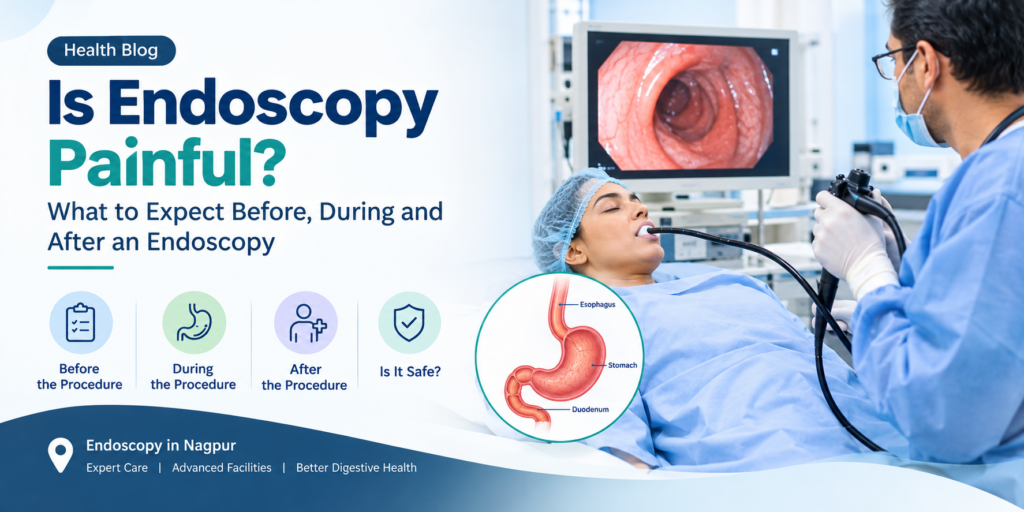
An upper GI endoscopy is a procedure used to examine the upper digestive tract, including the esophagus, stomach, and duodenum. A thin, flexible tube with a camera is passed through the mouth so the doctor can examine the digestive tract and, when required, take tissue samples or perform certain treatments.
Is Endoscopy Painful?
Upper GI endoscopy is generally well tolerated. Patients may experience some discomfort, pressure, gagging, or a sensation of fullness during the procedure, but sedation and throat-numbing medication may be used to improve comfort.
Many patients become very relaxed or fall asleep during the examination. The endoscope does not interfere with normal breathing. The level of sedation depends on the procedure, the patient’s health, and the clinical situation.
If you are considering Endoscopy in Nagpur, your doctor can explain the procedure, preparation requirements, sedation options, and what you can expect based on your individual medical situation.
Why Is an Endoscopy Recommended?
An upper GI endoscopy may be recommended to investigate symptoms or conditions affecting the upper digestive tract.
Some common reasons include:
- Persistent upper abdominal pain
- Ongoing heartburn or reflux symptoms
- Recurrent vomiting
- Difficulty swallowing
- Unexplained upper digestive symptoms
- Suspected gastrointestinal bleeding
- Evaluation of inflammation or ulcers
- Assessment of certain digestive conditions
An endoscopy can also allow the doctor to take a small tissue sample for laboratory examination. A biopsy itself generally does not cause discomfort because the tissue is collected through instruments passed through the endoscope.
What to Expect Before an Endoscopy
Preparation is important for a safe and clear examination.
Fasting Before the Procedure
Your doctor will provide specific instructions about when to stop eating and drinking. An empty stomach helps the doctor obtain a clear view and can also improve procedural safety. NIDDK notes that patients may be asked not to eat or drink for up to 8 hours before an upper GI endoscopy, although instructions can vary depending on the situation.
Discuss Your Medicines
Tell your doctor about all medicines, supplements, and over-the-counter products you take. This is particularly important if you use blood thinners, medicines for diabetes, aspirin-containing medicines, or other medicines that may need adjustment before the procedure.
Do not stop or change prescribed medicines unless your doctor advises you to do so.
Discuss Medical Conditions and Allergies
Before the procedure, inform the doctor about existing medical conditions, medication allergies, previous reactions to sedation or anesthesia, and any other relevant medical history.
Arrange Transportation if Sedation Is Used
If sedation is given, its effects can continue after the procedure. You should arrange for someone to take you home and follow the discharge instructions provided by the medical team.
What Happens During an Endoscopy?
Before starting, the medical team may give you a sedative to help you relax. A local anesthetic may also be used to numb the throat.
You will generally lie on your side while the doctor carefully passes the endoscope through the mouth into the esophagus, stomach, and duodenum.
The camera sends images to a monitor, allowing the doctor to examine the lining of the upper digestive tract. The doctor may take small tissue samples or perform certain treatments when required.
An upper GI endoscopy typically takes around 10 to 20 minutes, although the total time at the facility can be longer because of preparation and recovery.
What Does Endoscopy Feel Like?
The experience can vary between individuals. Some people may notice pressure in the throat, mild gagging, bloating, or discomfort from air introduced into the stomach during the examination.
Sedation can reduce anxiety and discomfort, and many patients remember very little of the procedure afterward. The choice and level of sedation should be determined according to the patient’s medical condition and the procedure being performed.
What to Expect After an Endoscopy
After the procedure, you will usually be monitored while the effects of sedation wear off.
Some temporary symptoms may include:
- Mild sore throat
- Bloating
- Mild nausea
- Feeling drowsy after sedation
These symptoms generally improve over a short period. Your doctor will provide instructions about eating, drinking, medicines, driving, and other activities after the procedure.
If tissue samples were taken, the biopsy results may take longer because they need to be examined by a pathologist. Some findings from the examination itself may be discussed soon after the procedure.
Is Endoscopy Safe?
Upper GI endoscopy is generally considered a low-risk procedure, but complications can occur. Possible risks include reactions to sedation, bleeding, and perforation of the digestive tract. Serious complications are uncommon, but the individual level of risk depends on the patient’s health and the type of procedure performed.
Seek medical attention promptly if you develop symptoms such as worsening chest or abdominal pain, difficulty breathing or swallowing, significant bleeding, black stools, bloody vomiting, or fever after the procedure.
Choosing Endoscopy Services in Nagpur
When arranging Endoscopy services in Nagpur, patients should consider whether the procedure is being performed by a suitably trained specialist and whether appropriate pre-procedure assessment, monitoring, recovery instructions, and follow-up are available.
It is also important to discuss the reason for the procedure, expected benefits, possible risks, sedation plan, preparation requirements, and any questions you may have before giving consent. ASGE recommends appropriate assessment and monitoring around sedated endoscopic procedures.
What Is a Gastroscopy Clinic?
A Gastroscopy clinic in Nagpur may provide upper digestive tract examination using a gastroscope. Gastroscopy is another term commonly used for an upper GI endoscopy, which examines the esophagus, stomach, and duodenum.
The procedure may help investigate symptoms such as persistent upper abdominal discomfort, reflux symptoms, vomiting, swallowing difficulties, or suspected bleeding.
When Should You Discuss Endoscopy With a Doctor?
An endoscopy is not necessary for every digestive symptom. Your doctor will consider your symptoms, medical history, examination findings, age, risk factors, and previous test results before deciding whether the procedure is appropriate.
You should discuss persistent or concerning upper digestive symptoms with a qualified gastroenterologist rather than deciding on an endoscopy based only on symptoms.
Endoscopy in Nagpur
Dr. Rachit Agarwal provides gastroenterology care in Nagpur, including diagnostic and therapeutic endoscopic procedures when clinically indicated. An endoscopy can help examine the upper digestive tract and may assist in diagnosing or managing selected gastrointestinal conditions.
Endoscopy is a painless procedure when done under anaesthesia. We at Swastik gastro clinic ensure that your procedure has utmost comfort and no pain. We always have an anaesthetist who takes care of your health and ensures that you do not feel any discomfort during the procedure.
If an endoscopy has been recommended, discussing your symptoms, medical history, medicines, preparation, sedation, and expected recovery with your gastroenterologist can help you understand what to expect from the procedure.